

Shed clearance before autumn ends means keeping useful, sound equipment, passing on items someone else can use and separating rubbish for appropriate disposal. Store retained tools clean and dry, with heavy items low down and a clear route through the shed. Keep chemicals, batteries and electrical equipment apart from ordinary waste. If you want the structure removed too, agree that separately. Emptying a shed and dismantling it involve different work, risks and disposal arrangements.
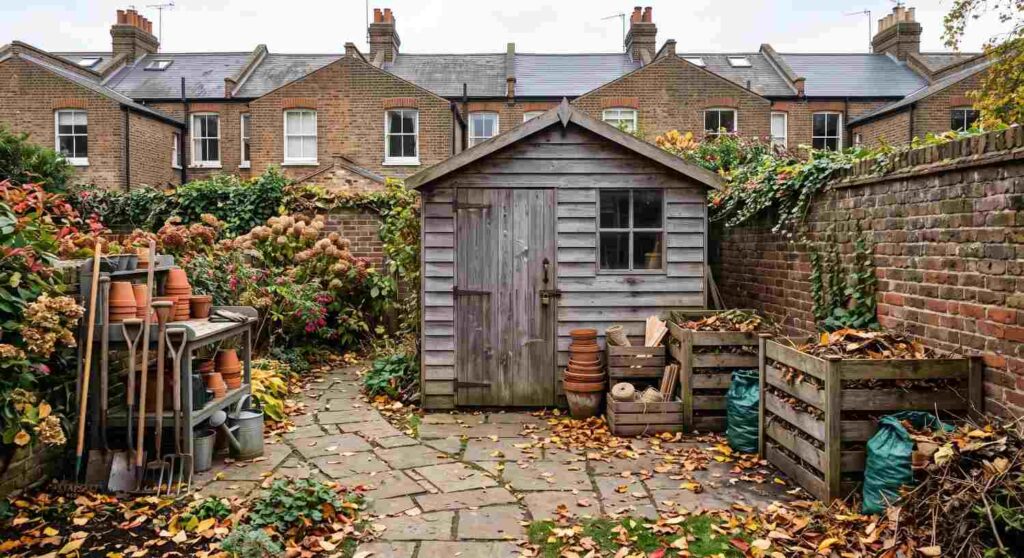
The difficulty usually starts behind the first row of things. There is a bag of hardened compost under the bench, a mower nobody has used recently and spare timber wedged behind the shelves. Pull everything out at once and you can quickly block the garden.
At Move-on Up, I prefer to establish what stays and how the rest will leave before anything moves. In a West London terrace, an outdoor job can involve carrying every item through the house. That changes the plan.
Decide what earns its space
Begin your outdoor storage clearance with a small working area near the door. Sort one shelf or floor section at a time rather than spreading the contents across wet paving.
Keep equipment that works, suits your current garden and has somewhere sensible to live. A good pair of secateurs needs little space. Three damaged watering cans can occupy an entire shelf without earning it.
Use these questions to make decisions:
- Have you used the item during the past gardening year?
- Does it work safely, or does it need a repair you will actually arrange?
- Do you already own another item that does the same job?
- Can someone else make proper use of it?
- Can you store it without blocking access?
Give uncertain items a decision deadline. A box marked “sort later” often becomes permanent.
Sound pots, spare hand tools and usable garden furniture may suit reuse. Be honest about their condition. Do not pass on defective electrical equipment as working or leave sharp, broken items loose in a donation box.
Plan shed clearance around access
For outdoor shed clearance, photograph the route as carefully as the contents. Include the shed doorway, garden steps, side passage and any rooms the load must cross.
A tall shelving unit may fit through the shed door but fail at the turn into a basement kitchen. Bagged soil can look like a modest load until someone has to carry it up steps. Identify weight and awkward dimensions before collection day.
Our post about how access affects the cost of a job explains why the carrying route matters alongside volume.
In a period conversion, keep communal corridors and stairwells usable. Agree access with the relevant occupier or building manager where necessary. Do not create a holding pile on the pavement while deciding where the van can stop.
Shed clearance or structure removal?
Plastic shed clearance can mean emptying a resin storage unit or removing the unit itself. Make that distinction explicit. Contents removal does not automatically include dismantling panels, lifting a base or taking away paving.
A search for “shed demolition and removal near me” describes a different scope again. Before accepting structural work, a contractor needs to understand the shed’s construction, condition, access and any electrical connection. Move-on Up’s garden clearance service should not be treated as a promise of specialist demolition or asbestos removal.
The Health and Safety Executive’s asbestos guidance says to stop work if suspected asbestos is encountered and warns that asbestos cement sheets should not be broken into smaller pieces. An unfamiliar older roof needs assessment, not a hammer to make it fit in the van.
Separate rubbish before collection
Shed rubbish clearance becomes easier to quote and handle when different materials remain identifiable. A mixed sack containing leaves, paint tins and broken glass creates avoidable problems.
Keep garden cuttings apart from damaged furniture and building materials. Put batteries and unwanted electrical items aside. Leave chemicals in their original containers with labels intact, and flag leaking or unidentified containers before work starts.
Do not pour leftover paint, pesticides or oils into drains or onto the garden. Ask about the correct disposal route rather than assuming every item belongs in the same collection.
GOV.UK’s household-waste guidance requires householders using a private waste collection business to check that it appears on the waste-carrier register, selecting “upper tier”. Insurance does not replace that check.
Ask which materials the collection covers and how excluded items will be dealt with. Keep the written quote and collection details. Responsible disposal should be part of the arrangement from the outset, not a question raised after the load has left.
Store what stays for winter
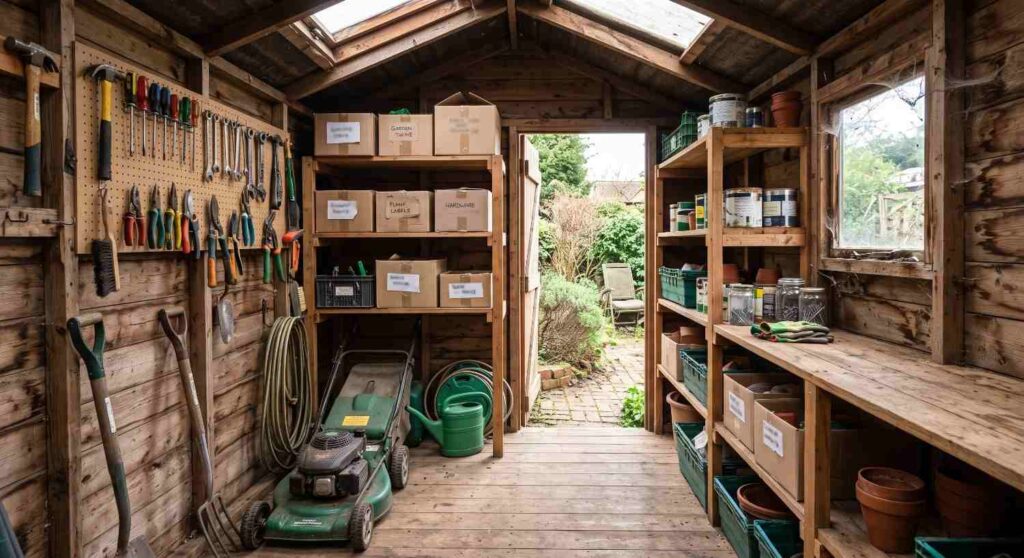
Once the floor is visible, check for damp patches, damaged shelving and anything that obstructs the door. Empty space helps you spot problems; it does not repair a leaking roof.
Brush soil from hand tools and let them dry before storage. Follow the manufacturer’s instructions for powered equipment, batteries and anything that uses fuel. Do not improvise a storage method because it saves a shelf.
Place heavy equipment at floor level or on a suitable low shelf. Keep frequently used tools accessible, with sharp edges protected. Avoid loose stacks that need dismantling whenever you want one item.
Use labelled containers for small fittings and accessories. Keep instructions with the equipment where practical. Store cushions and textiles only once dry, and consider indoor storage if the shed remains damp.
Our explanation of what an access and handling plan involves applies equally to reorganising bulky shed contents: decide the destination before lifting.
Agree a clear scope
For combined garden and shed clearance, identify exactly which areas need attention. Emptying shelves, removing a broken bench and clearing vegetation are separate tasks, even when they happen on the same visit.
Send photographs, your postcode and details of access when requesting a shed clearance service. Mark retained items clearly. Mention anything unusually heavy, sharp, electrical or potentially hazardous.
Move-on Up provides fixed, transparent quotes with no hidden fees and carries goods-in-transit and public liability insurance. Evening, weekend and same-day scheduling is available, subject to availability and workable arrangements.
A successful shed clearance leaves you able to find the tools you need and reach them without shifting a pile. That is the useful result before winter: less unwanted clutter, sensible storage and a door you can open properly.