

Step-by-step prep for private buyers starts with knowing exactly what is being moved, where it must travel and how it will be protected at every handover. For high-value artwork, photograph current condition, measure the work and access route, arrange suitable packing, confirm insurance and secure practical loading space. In Notting Hill and Kensington, narrow hallways, period staircases and restricted parking often shape the safest method as much as the artwork itself.
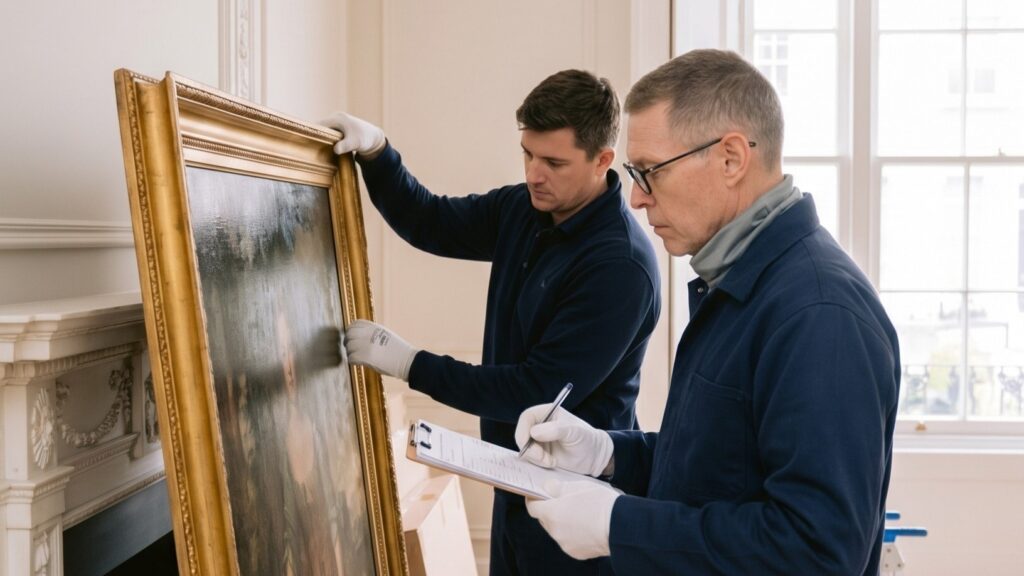
A private collection rarely arrives as one simple package. A framed canvas may need a two-person carry, a sculpture may need a rigid crate, and a work with a fragile surface may need conservator advice before it leaves the wall. Good preparation gives everyone a clear record of the piece and stops rushed decisions on collection day.
At Move-on Up, we build the job around the artwork, the property and the route. Our art transport service in Kensington covers careful collection, protective packing and secure transport across West London, with goods-in-transit and public-liability insurance, fixed transparent quotes and flexible scheduling.
Step-by-step prep for private buyers before collection
Start with a short inventory. Give every piece a reference number, a title or description, dimensions and a photograph of the front, back and each corner. Photograph any existing chip, scuff, loose frame joint or mark. This is not about expecting damage. It is about making condition clear before the move.
Measure the artwork, then measure the route. In a Notting Hill townhouse, a piece may fit through a front door but catch on the turn of a narrow Victorian staircase. Check internal doors, communal corridors, lift dimensions and the space around each landing. If the route is tight, tell the removal team before the day. An experienced art mover can plan a safe carry, or advise if crating, a different route or specialist support is needed.
The American Institute for Conservation advises owners to consider the different needs of the materials in their collections. That matters with art. A heavy gilt frame, a glazed work on paper and a contemporary sculpture do not need the same packing or handling method.
Packing and handling high-value art
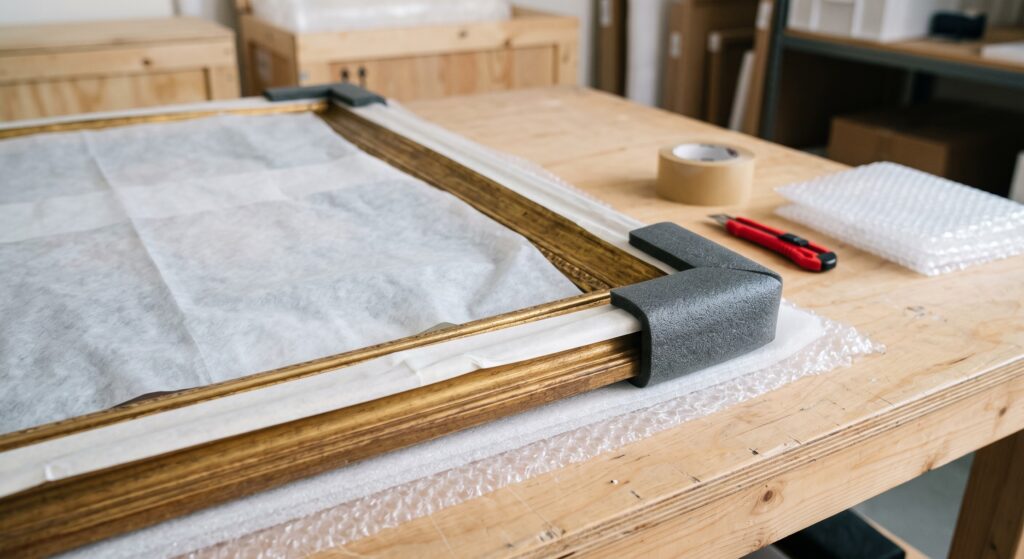
Fine art movers should choose protective materials according to the object, not apply the same wrap to everything. We inspect the frame, glazing, surface and fittings before we start. We then plan how the piece will travel and which areas need the most support.
For framed paintings and prints, that can mean glassine or acid-free tissue where suitable, corner protection, foam, padded blankets and rigid boards. We never apply tape directly to an artwork or finished frame. A fragile sculpture may need a tailored crate, internal bracing and a clear orientation mark, so it remains stable throughout the journey.
Step-by-step prep for private buyers on moving day
Clear the route before the crew arrives. Move small furniture, remove loose rugs and keep pets away from the carrying path. A clean route matters on any move, but it matters more where the load has awkward dimensions or a delicate surface.
The Health and Safety Executive says handlers should plan the lift, keep a load close to the body, avoid twisting and use assistance where needed. Its guidance also makes clear that manual-handling risk is not determined by weight alone, because the shape of the object, route and conditions all matter. Read the HSE’s good handling technique guidance for the principles behind a controlled lift.
During a difficult carry, one person should direct the movement. The team stops at a landing if they need to change grip or direction. We would rather pause for thirty seconds than force a framed work around a bannister or across a tight threshold.
Secure loading and West London access
Fine art transport services depend on safe loading as much as safe packing. Inside the van, a work must travel in a planned position, protected from movement and separated from heavy furniture or loose items. Art should never be treated as a gap-filler at the end of a removal load.
Parking deserves attention early. Around Kensington, Holland Park and Notting Hill, a long carry from the nearest legal space can expose work to poor weather, crowded pavements and repeated handling. The Royal Borough of Kensington and Chelsea states that resident-bay suspensions usually need ten working days’ notice, while pay-by-phone bay suspensions usually need two working days. The council can grant suspensions for removals, subject to its process and terms, as set out in its parking suspension information.
For larger jobs, we discuss access at both ends before quoting. That means looking at resident bays, loading space, building management rules and the carry from van to door. This is where reliable fine art services and transport differs from turning up with blankets and hoping the street is clear.
Questions to ask art transport companies
Ask art transport companies how they assess access, what protection they will use and whether the quote includes loading conditions that affect the job. A clear answer should cover the collection, the journey and delivery, rather than making broad promises about careful handling.
Ask whether the company has goods-in-transit and public-liability insurance, then make sure the policy arrangements fit the value and circumstances of your collection. If you have exceptional values, unusual materials or a piece already showing signs of instability, speak with your insurer and a qualified conservator before the move.
Professional art movers should also tell you where their role ends. A removal team can package, carry and transport with care. It cannot restore flaking paint, repair a failing frame or confirm the condition of a work that needs conservation assessment. We say so plainly when specialist advice is the sensible next step.
For collections travelling as part of a wider home move, Move-on Up can organise house removals, professional packing and art transport under one practical plan. That avoids having valuable pieces packed late, carried around other work or loaded without a dedicated space in the van.
A checklist worth keeping
Step-by-step prep for private buyers works because it reduces uncertainty before it becomes a problem. Keep the following ready for the removal team:
- A numbered inventory with photographs and dimensions.
- Notes on pre-existing condition and any vulnerable areas.
- Measurements of entrances, lifts, corridors and stair turns.
- Collection and delivery contact details, including building access arrangements.
- Parking or suspension details where needed.
- Insurance information and any instructions from a conservator.
- A clear decision on what travels separately, in a crate or with the main removal.
Fine art services & transport should feel controlled from the first conversation to final placement. Dougal and the Move-on Up team work throughout West London with eco-friendly packing materials, transparent fixed pricing and evening, weekend or same-day availability where the job can be safely arranged.
We have also written about moving art and antiques in Notting Hill, including why the right crate and a measured access route make a real difference for fragile, high-value work.