

Transporting fine art in West London calls for more than a careful pair of hands and a padded removal van. Each piece needs a condition check, a handling plan, the right protective materials and a route that accounts for tight staircases, parking and loading access. In Notting Hill and Kensington, that often means planning around converted townhouses, narrow communal halls and resident bays. Move-on Up provides insured art transport with transparent fixed quotes, practical scheduling and proper preparation for framed works, sculptures and collections.
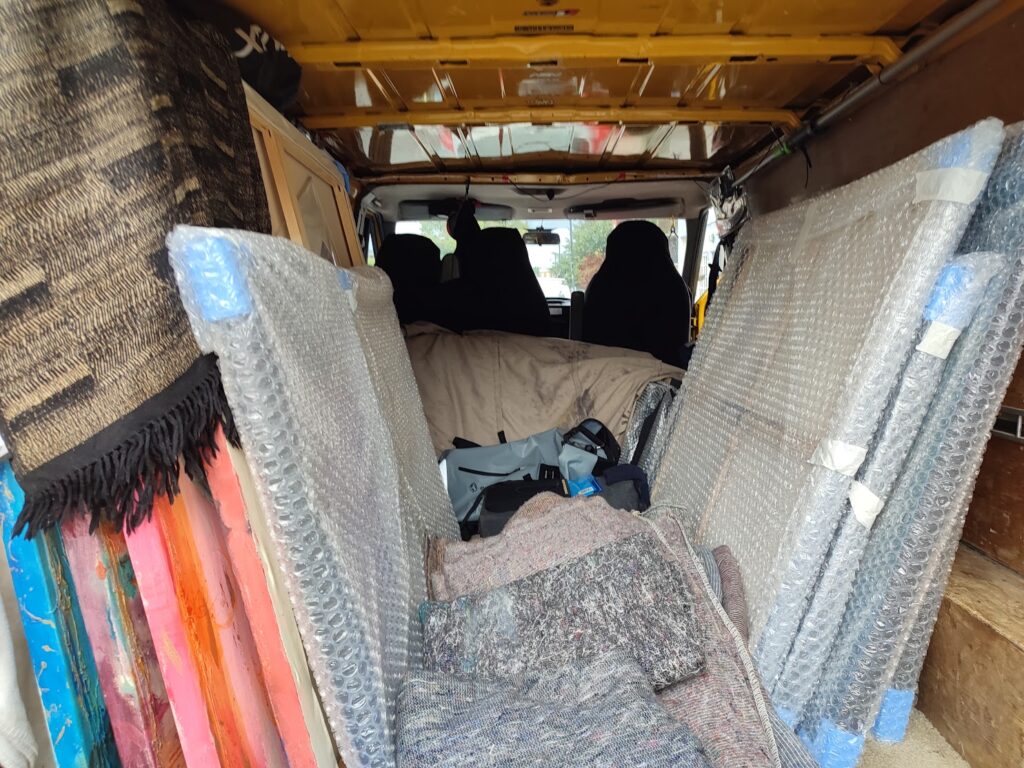
A painting can be irreplaceable even when it is not large. The same goes for a bronze, a glazed ceramic piece or a framed photograph with a fragile mount. The risk usually appears at transition points: lifting from a wall, turning on a landing, negotiating a stairwell, loading into the van, then unpacking at the other end.
I treat those points as separate jobs. Before a collection moves, we look at the dimensions, weight, frame condition, access at both addresses and whether the work must travel upright, flat or in a crate. The art transport service in Kensington is built around that preparation, rather than treating art as another box on a general removal.
Transporting fine art starts with a proper assessment
Transporting fine art safely begins before anyone touches the work. Take clear photographs of the front, back, corners and existing marks. Record frame fittings, hanging wire and any loose or vulnerable sections. This gives the owner and crew a common reference point before loading.
For framed art, we do not lift by the hanging wire or fittings. The American Institute for Conservation’s guidance on caring for belongings makes the wider point well: different materials need different handling and storage approaches. A heavy gilt frame, for example, needs support under its strongest structural sections, while fingers stay off decorative surfaces.
In West London, access changes the method. A large canvas may fit through the front door of a Notting Hill terrace but not around the turn on a Victorian staircase. We measure first. If the route is tight, a larger team, a different carrying angle or a purpose-made crate may be the safer answer. Guessing on the day is how corners get knocked and frames get stressed.
Materials should match the artwork
Fine art movers should use materials for the work in front of them, not one blanket-and-tape routine for everything.
- Glassine or acid-free tissue can protect a painted or delicate surface where appropriate.
- Corner protectors reduce pressure on frame edges.
- Foam, padded blankets and rigid boards protect framed works during handling and transit.
- A crate gives valuable, unusually shaped or especially fragile work a rigid outer shell.
- Clearly marked orientation labels help the crew load and unload the piece consistently.
We avoid taping directly onto a frame, artwork or finished surface. The aim is to protect the object without introducing residue, pressure or abrasion.
Plan the street as carefully as the van
Fine art transport services in Notting Hill need a realistic parking plan. A van parked half a street away turns a short carry into repeated exposure to kerbs, pedestrians, rain and uneven paving. It also makes it harder to keep a two-person carry steady.
The Royal Borough of Kensington and Chelsea says a resident-bay suspension normally requires ten working days’ written notice, while a pay-by-phone bay requires two working days. The council also explains that domestic removals can load continuously from an available bay or certain single yellow lines without a suspension, provided the vehicle does not obstruct traffic and the conditions are met. See the council’s parking suspension guidance before assuming a van can wait outside.
A suspension is useful when the collection is substantial, access is awkward or the loading needs to happen directly outside. On roads around Westbourne Grove, Ladbroke Grove and Holland Park, timing matters as much as distance. One-way systems, school traffic and busy pavement space can quickly turn an apparently simple collection into a difficult carry.
For broader household moves containing a few important pieces, Move-on Up can coordinate art handling within the removal rather than leaving a valuable picture to travel loose among furniture.
What a careful transport day looks like
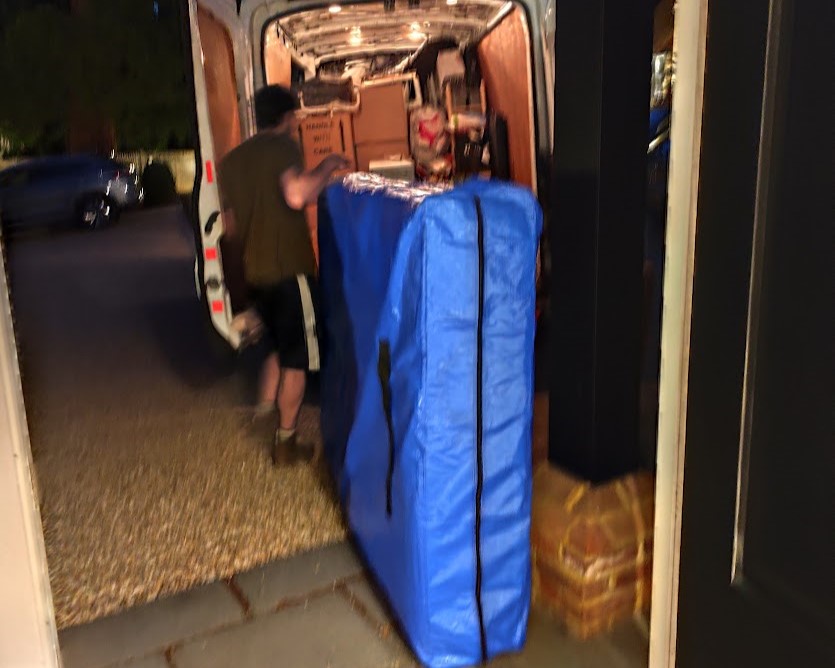
On collection day, the crew should have the materials ready before the artwork comes off the wall. We clear the route, protect vulnerable edges and decide who directs the lift. One person gives the instructions. That avoids two people making separate calls halfway through a tight turn.
A good art mover does not rush a stair carry because another job is waiting. On the period-property staircases common in Kensington and Notting Hill, the banister, ceiling height and turn at each landing matter. A work may need to travel vertically until the landing, then be repositioned with space and control. If it cannot move safely, we stop and reassess.
Inside the removal van, art should be secured so it cannot slide, fall or take pressure from heavier items. It should not be treated as infill around furniture. Where the job requires dedicated protection, we use a planned position in the load, proper padding and restraint. Our goods-in-transit and public-liability insurance form part of that professional approach, but careful prevention is always the first line of defence.
Choosing art transport companies with care
Ask art transport companies direct questions before booking. You need clear answers about packing, lifting, vehicle loading, insurance and access planning. “We will be careful” is not a method.
Useful questions include:
- Will you inspect the collection and access route before the job?
- Which materials will you use against the artwork and frame?
- Can you arrange or work around parking requirements?
- Is the quote fixed, and does it explain what it includes?
- What insurance applies during loading, transport and unloading?
- When would you recommend a crate or specialist conservator input?
Professional art movers should also be honest about limits. A removal crew can pack and transport a work with care, but conservation, restoration and authentication sit with trained conservators and specialists. If a frame is already unstable, the paint surface is flaking or the object has a known condition issue, ask a conservator for advice before transport.
For additional preparation ideas, the team has also covered moving art and antiques in Notting Hill, including why a proper crate and a planned route matter more than a last-minute wrap.
A safer move for a collection
Transporting fine art is about controlling the small risks before they become damage. Measure the access route. Document condition. Choose materials that suit the work. Plan parking early. Give the crew enough time to carry, load and unload without forcing a tight turn or leaving a piece exposed on the pavement.
Move-on Up works across West London with fixed, transparent quotes, flexible evening, weekend and same-day availability where the job allows, and eco-friendly packing materials. For a collector, gallery move or a household relocation with valued pieces, I would rather plan the awkward details beforehand than promise they will somehow work themselves out on the day.